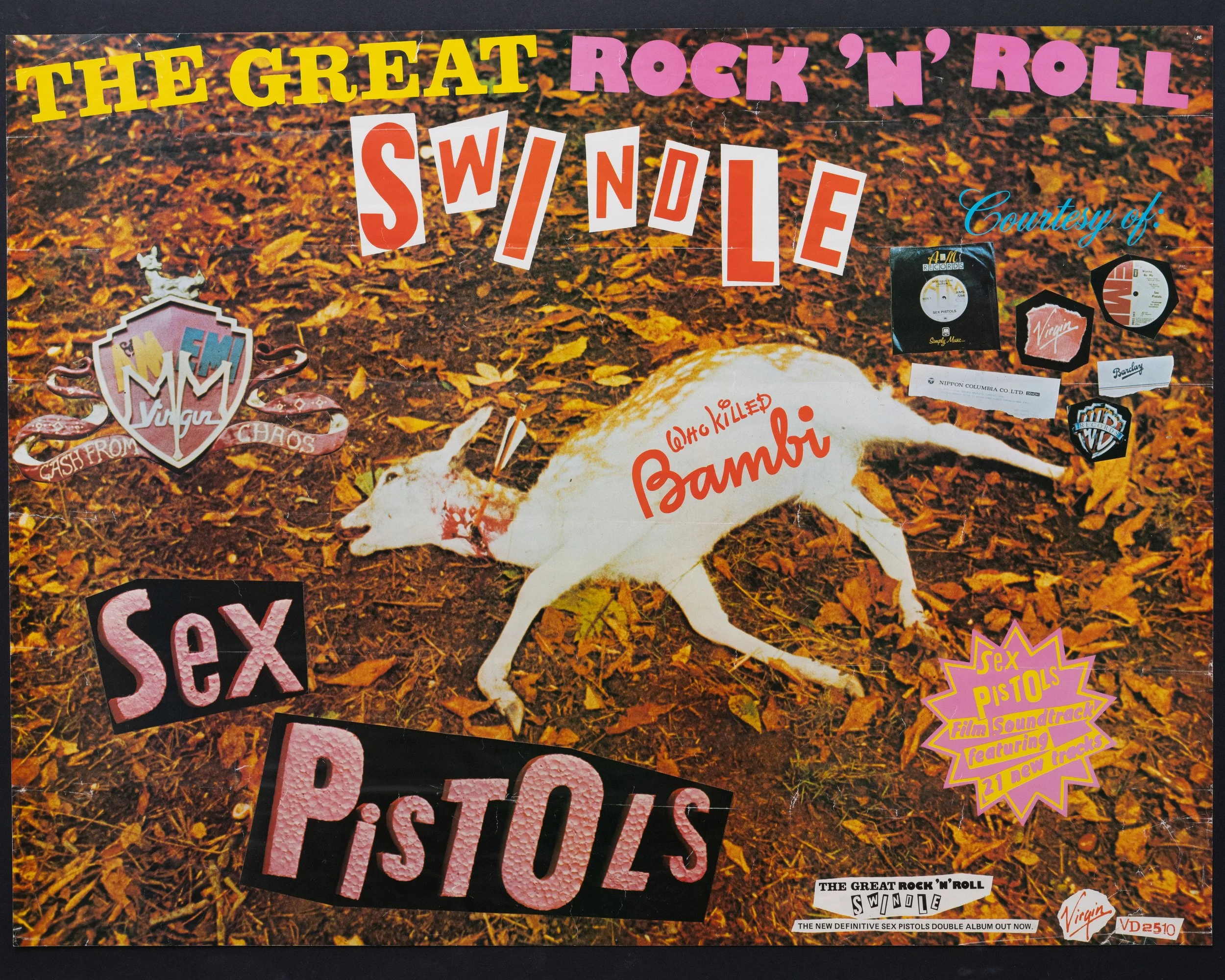
Design Museum Den Bosch presents the first exhibition in the Netherlands dedicated to Jamie Reid (1947-2023), opening 27 June 2026. The British artist, designer and activist is celebrated worldwide for his artwork on the iconic album sleeve Never Mind the Bollocks, Here's the Sex Pistols (1977). Yet the designs from punk's golden era represent only a small portion of Reid’s wider body of work. The exhibition brings together a remarkably diverse range of pieces: from activist zines and anarchist collages from the 1970s to films, spatial installations and mystical paintings from the decades that followed.
Fifty years of punk and protest…
Fifty years on from the rise of punk – and with it Reid's breakthrough – Design Museum Den Bosch examines the pivotal role his activist work and outlook played on the world of graphic design. The exhibition introduces visitors to a political artist who spent his entire life fighting against the suffocation of consumer society and striving for an alternative life rooted in freedom. His deepest ambition was to build a new world upon the ruins of the old.
In 1976 – exactly fifty years ago – the British punk band the Sex Pistols embarked on tour. They were swiftly boycotted across much of England, owing to their shocking language and aggressive behaviour. Jamie Reid supplied the band with its iconic visual language, and in doing so gave punk its defining aesthetic: a radical DIY approach – raw and endlessly reproducible – that was emulated by generations of designers and inspired them to engage and take action. After punk, Reid chose not to capitalise commercially on those celebrated Years of Fame. Instead, he pursued an activist life as an artist, protesting in word and image against Margaret Thatcher's cold political agenda, what he saw as the perverse war in Iraq, and the arrest of Pussy Riot and the rise of Putin.
…and nature and freedom
In everything he did, Jamie Reid saw himself not as a solitary artist but as someone working collaboratively towards art with a social purpose. His work was not merely a protest; it was also a call for a life and a society in harmony with the natural world, and it offered concrete visions of how that might look. Alongside his activism, the exhibition therefore also presents his esoteric and spiritual work. Drawing on his family's tradition of pagan nature religion (Druidry), Reid created ecological art, constructed tipis as symbols of community spirit, and painted large banners for processions and druidic rituals. These works reveal the two sides of the same coin in Reid's life: activism and mysticism. Punk stood for protest and the dismantling of a conservative, commerce-driven society; his mystical work offered a vision of freedom and natural harmony.